On 10 October, Indonesia’s President Prabowo Subianto issued Peraturan Presidena 109, a decree on how to go about “the Urban Waste Management through Environmentally Friendly Technology – Based Conversion of Waste into Renewable Energy” (PerPres 109 / 2025).
Indonesia is hardly alone in generating a whole lot of rubbish in that it disposes of the equivalent of 1,200 blue whales per day (using a novel measure of weight currently being pioneered by faraway Scottish Water in Logie Group’s homeland). Nor is Indonesia alone in kicking this (non-biodegradable but recyclable) can down the road by doing little about this.
The previous PerPres 35 / 2018 on Waste To Energy set a low bar in that it delivered only two tiny projects. However, the new PerPres takes several significant steps in the right direction so will be cautiously welcomed by investors, lenders and their advisors.
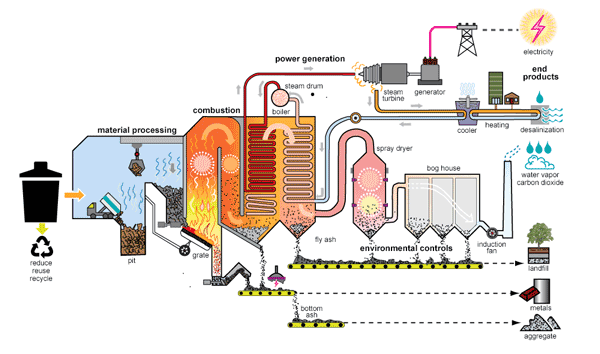
WTE projects across the World have typically been structured such that a municipality collects the rubbish in its (urban) area, sorts it, recycles what it can then pays the project a tipping fee to take the rest off its hands (or pays the project to do the sorting and recycling as this requires further kit). The project then incinerates this and sells the resulting power back to the municipality. This involves the project taking two payment risks as well as a significant performance risk on the municipality (which is rarely creditworthy and which is one reason why, as Logie Group has long explained, so many of these projects have failed to eventuate.
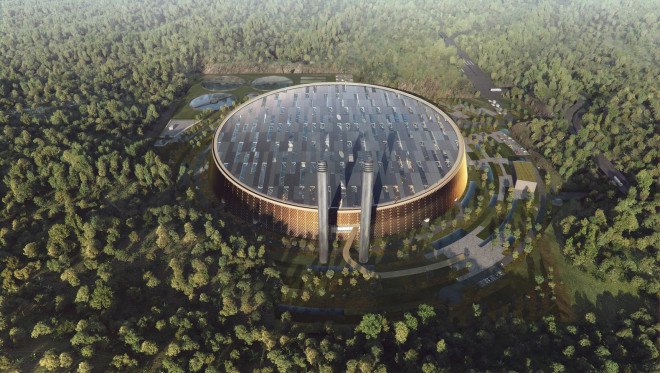
Last year, the Logie Group board met key players at the AIIB around its annual meeting in Samarkand. Uzbekistan has since launched the first two of a series of large scale WTE projects, structured so as address the payment issue, all as it happens, using Chinese technology / funding (a plant proposed for Shenzhen is pictured). Indonesia has taken note in that its new PerPres makes similar tweaks to the typical structure.
Thus, projects will now instead sell their power to PLN which is creditworthy because of the MOF’s obligation to reimburse it for its Public Service Obligation, as enshrined in the country’s constitution. The PPA will need to fit in with the recently enacted Regulation No. 5 of 2025 from the Ministry of Energy and Economic Resources on “Guidelines for Power Purchase Agreements from Power Plants Utilizing Renewable Energy Sources” (MEMR 5 2025). Tipping fees have been dispensed with and there is a Feed In Tariff of a flat 20 US cents per kWh (and with it, a long term FX exposure). This looks pretty juicy in year 1 but considerably less so in a distant year 30. (The kit will be obsolete by then but still functioning; retrofitting sooner ought to be encouraged; investors should have made reasonable returns by then; lenders will need to consider their loan tenors.)
This deals with the two (now one) payment risks but still leaves the project vulnerable to the municipality performance risk: what if it delivers too little waste? Or if the waste is not the expected mix? In fact, who will take responsibility for the mix by doing the sorting and recycling ahead of the incineration? The fuel mix in a WTE plant is hugely determinative of efficiency and thus output / revenue. It is in the Cooperation Agreement between municipality and project company that the project viability thus now lies. (Cooperation Agreements also require the municipality to supply the site.)
Then there are the familiar issues of which technology to use, emissions standards, neighbourly objections and more. However, with no domestic track record to speak of, this is where the opportunity lies for foreign contractors / investors / their supporting Export Credit Agencies and other lenders.

The PerPres tasks BPI Danantara with coordinating the development process, selecting the developer by tender / direct appointment and then maybe investing in the project (this sort of conflict of interest is quite common in Asia). Danantara will surely be more effective / reliable / consistent than your average municipality but it was only set up last year, is unlikely to be swimming in surplus funds like conventional Sovereign Wealth Funds (it has raised some debt but not yet published accounts) and will probably have to add the necessary appraisal and management skills to play this role. And how is this so different to what SMI and the Indonesia Infrastructure Fund. are already doing?
There are always seemingly more immediate issues in Indonesia – Andrew did some interesting work for Ibu Sri Mulyani a while back and was disheartened by her recent departure. However, the much neglected but increasingly necessary Waste To Energy sector needs reviving and, whilst the President may not yet have achieved that revival, this PerPres is at least a much needed first step in the right direction. Logie Group stands ready to advise investors and lenders alike.