Logie Group was out and about in Thailand’s Eastern Economic Corridor this week, looking to invest beyond infrastructure in high – end agriculture (Nam Dok Mai mangos) but mindful of how the government’s long – term plans for the region are changing.
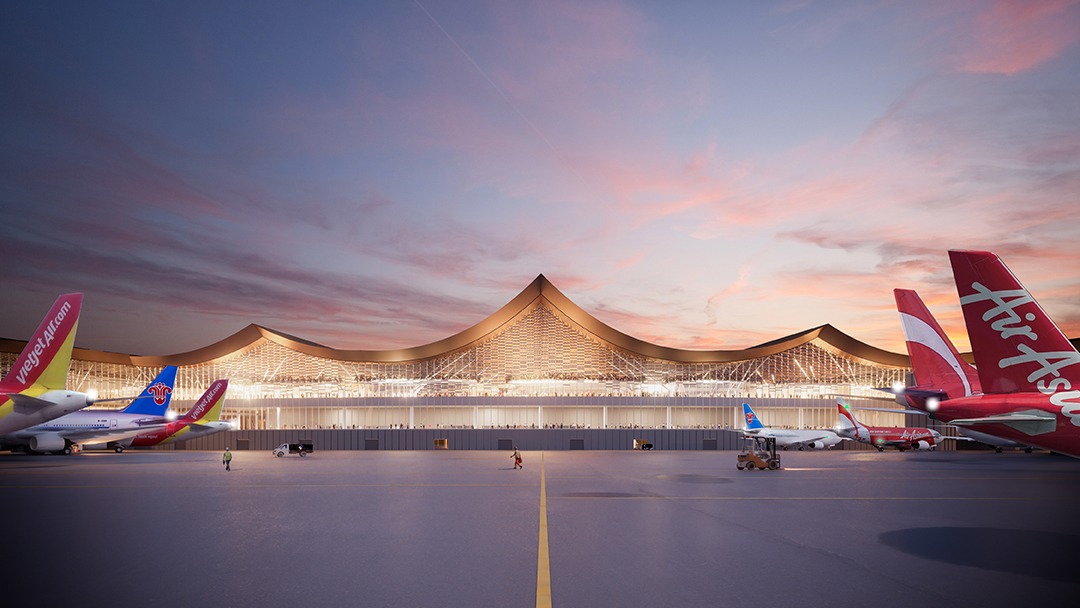
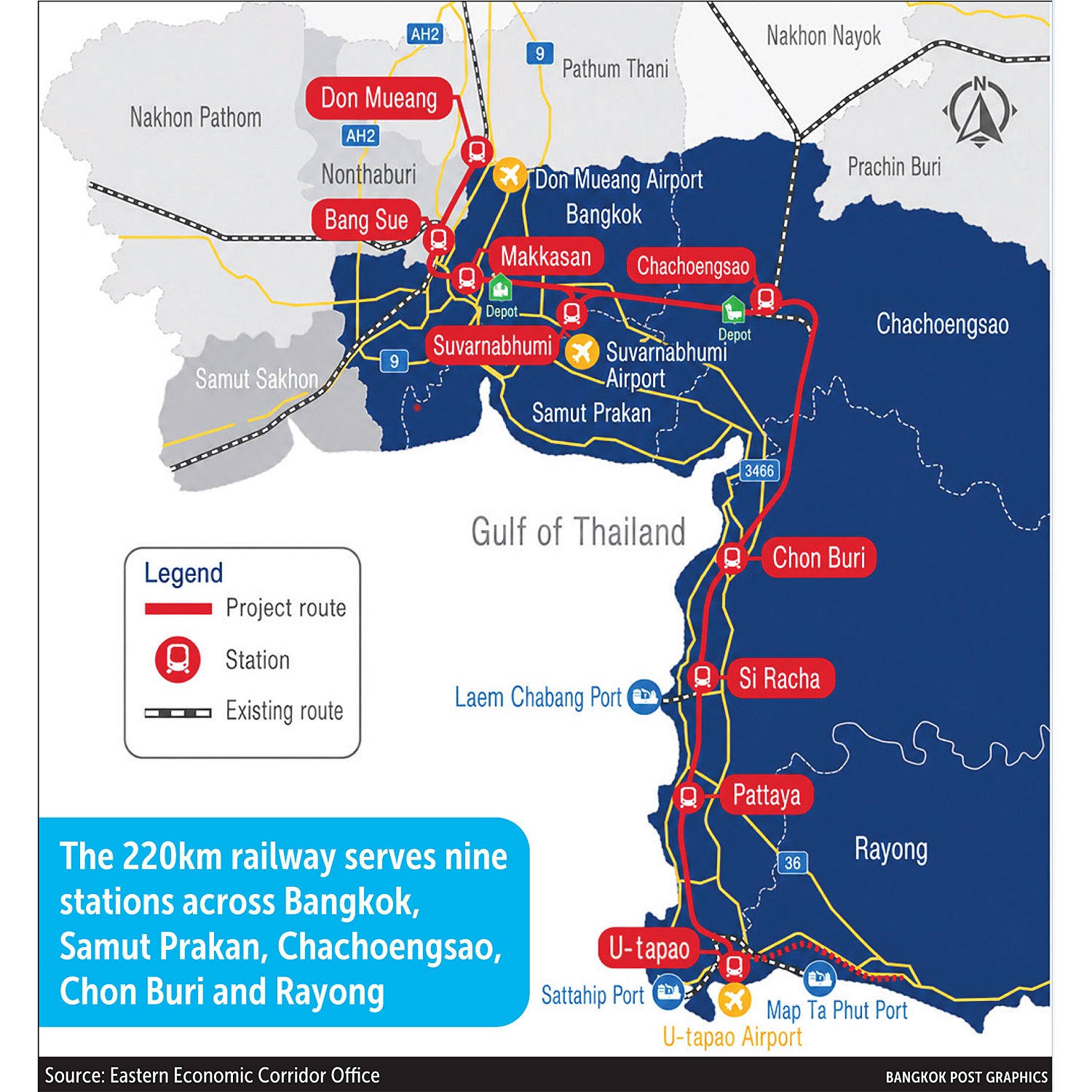 Central to those plans were two mutually dependent projects, namely a second runway at U – Tapao airport and a high speed rail link linking U – Tapao to Bangkok’s two airports, Suvarnabhumi and Don Mueang. Investors and lenders should always be wary of project – on – project risk, especially as both of these are PPPs, hence Logie Group’s opinion piece on the airport back in 2020 – commendable long term vision in the midst of Covid but sponsors Bangkok Airways, BTS Group and Sino – Thai Engineering (now known as Stecon Group) should make full expansion dependent on the railway also going ahead.
Notice to Proceed at the airport was finally issued in April this year, enabled by $423 million from the government courtesy of an AIIB sovereign loan but with capacity halved to 3 million pax pa having waived the condition precedent that the rail link should also go ahead …
… which there is every likelihood that it won’t, given that the Charoen Pokphand (CP) – led Asia Era One Co consortium this month admitted to buyer remorse and applied to the State Railway of Thailand to cancel their project. It was already in trouble having been signed in 2019 but construction hadn’t even begun. In the meantime, many private sector developers, focused on freight rather than passengers, have moved on anyway.
Downsizing / cancelling the projects are probably both sensible decisions but Thailand’s reputation for unviable planning persists.
The airport can be further upgraded over time as demonstrable demand builds.
However, with nine stations in only 220 km, the rail was never going to get the chance to save that much time. There is already an eight lane highway running the length of the corridor. And the crucial estimate of how many passengers were expected to transit between BKK, DMK and UTP – or the basis for that estimate – was never revealed. (BKK to DMK is 45 km across central Bangkok, Doing it via rail involves transfers at Makkasan / Petchaburi and Bang Sue. Take a cab.)
Governments need to plan their country’s infrastructure. They increasingly need the private sector to share the burden of risks and finance. It would be ideal if the requirement was accurately delineated from the outset as Thailand’s EGAT readily does in commissioning IPPs, both domestic and cross – border from Laos. Elsewhere in sectors such as road and rail, though, all too often the vision – especially when it comes to future traffic numbers – becomes clearer only slowly or not at all. A degree of flexibility is not unreasonable but the collateral damage in terms of lost time, money spent and opportunity cost can be significant to all involved (as well as those not involved such as speculative purchasers of nearby real estate).
Thailand is hoping for B130 billion ($3.9 billion) of future PPP contracts, mainly in transport, but this sort of track record in delivering viable opportunities will argue for continuing caution from the private sector.
As ever, specialist advice is recommended.
(Meanwhile, further south, the Laem Ao Ang to Laem Riu land bridge across the Kra isthmus is being kicked into the long grass. Logie Group has long been sceptical and this is probably another sensible decision.)